Ceramic or Stainless Steel for a Reusable Bottle?
Ceramic or stainless steel for a reusable bottle comes down to feel, weight and care; compare how each material fits your commute, desk and washing routine.
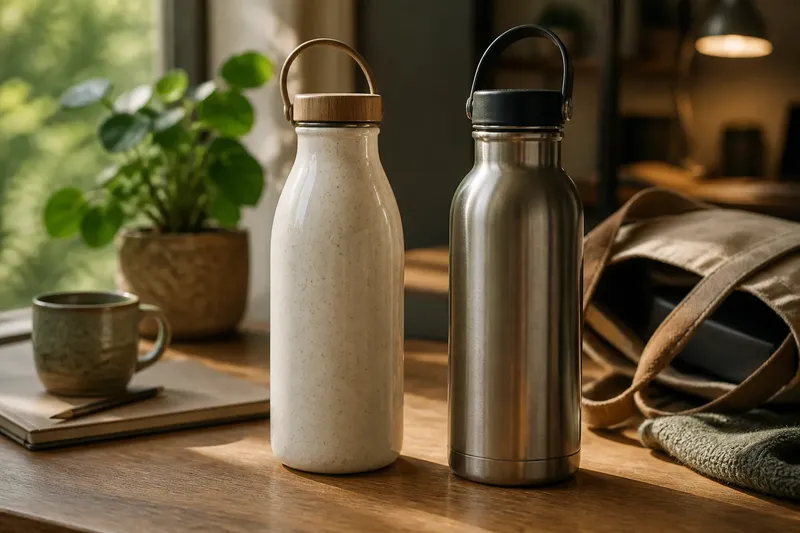
Choosing ceramic or stainless steel for a reusable bottle is less about which material is better and more about what you want to carry, touch and clean each day. A bottle that sits on a desk has different duties from one that travels in a packed bag, and the material changes how those duties feel.
Compare the two across these practical considerations, then give more weight to the ones your routine makes difficult to ignore.
1. Ceramic feels closer to a drinking cup
A ceramic-lined bottle puts a smooth, hard surface between the drink and the metal body. For people who dislike the idea of tasting from steel, that familiar cup-like contact can be the main attraction. The inner surface does not feel cold and metallic in the same way as exposed stainless steel.
“Ceramic bottle” can describe more than one construction. Some bottles are made primarily from ceramic; others have a stainless-steel shell with a ceramic coating or lining. Those designs differ in weight, protection and what happens if the bottle is knocked, so check the product description rather than relying on the broad label.
A ceramic lining may make a bottle feel more like a vessel for water, tea or coffee than a piece of outdoor kit. It can suit a desk, studio or kitchen, where the bottle is lifted often but not routinely dropped onto concrete.
Try the material in your hand if possible, or consider which drinking surface you already prefer in a mug.
2. Stainless steel is usually the more forgiving travelling shell
Stainless steel is often chosen for the outer body because it can take ordinary knocks without shattering. A dent or scratch may still be irritating, but it is a different sort of damage from a chipped ceramic body. That distinction matters if a bottle shares a tote with keys, a laptop charger and the general contents of a hurried morning.
Construction still matters. A stainless bottle may have a ceramic interior, plastic parts in its lid or a painted exterior; “stainless steel” does not describe every surface that touches the drink. Look at the stated materials for the body, lining, cap and seals separately.
Steel is not invulnerable. A hard impact can dent it, affect how a lid fits or damage a finish. But for a bottle that will be carried loose, passed around or used outdoors, the steel shell is commonly the less delicate choice.
Think about where the bottle is likely to land, not just where it will look good.
3. Weight changes the pleasure of carrying it
Material alone does not settle a bottle’s weight: capacity, wall thickness, insulation, base and lid all contribute. A double-wall steel bottle can feel substantial, while a ceramic design can be heavier or lighter depending on its construction. Compare the complete bottle, ideally in the size you would actually carry.
That weight becomes more noticeable when the bottle is full. If you walk between meetings or carry a bag over one shoulder, a little extra heft can change whether you bring the bottle at all. If it lives beside a keyboard, the same heft may feel reassuring rather than inconvenient.
Say you take a bottle on a daily train journey and already carry a laptop and lunch. Imagine that the ceramic option feels pleasant at your desk but makes the bag feel overfilled; choosing a lighter steel model could make it more likely to come along. The observable difference is simple: the bottle is either part of the routine or left on the counter.
Compare filled weight, not just the empty vessel.
4. The outer surface changes how a bottle behaves in the hand
Steel can feel cool, especially in a chilly room, and a polished finish may be slippery when wet. Powder-coated or textured exteriors can provide a different grip and appearance, though coatings may show wear over time. Some ceramic bottles offer a glazed surface that feels smooth; unglazed areas or shaped details can make the hold feel different again.
Condensation is not a reliable way to distinguish the materials if the bottle is insulated. Both may be double-walled and designed to keep the outer surface separate from the drink’s temperature. Check the construction rather than assuming that a steel shell must feel cold or that ceramic must stay comfortable.
Handles, narrow waists and lid shapes also affect grip. If you have limited hand strength or tend to drink while walking, a stable hold and an easy-to-open cap may matter more than the feel of the body. Those features are product choices, not properties of ceramic or steel alone.
Hold the bottle as you would while drinking, not only as you would while admiring it.
5. Upkeep depends on the lining, lid and drink
Both materials need regular washing, and neither makes a neglected cap smell agreeable. The body may be straightforward to rinse, while threads, seals and narrow lid channels collect residue. Tea, coffee and flavoured drinks can leave more noticeable traces than plain water, so a wide opening and a lid that comes apart sensibly can make cleaning less tedious.
A ceramic-lined interior may appeal if you want the drink to contact a surface that feels less metallic. It does not remove the need to clean the bottle, nor does a smooth lining make every stain or odour impossible. Stainless steel is also easy to maintain in many designs, but the surface treatment and any coating can affect how the manufacturer says it should be cared for.
For the exact bottle, follow its care label and the manufacturer’s instructions, particularly about dishwashers, abrasive cleaners and removable seals. If the cap cannot be cleaned properly, a preferred body material will not rescue the arrangement.
Inspect the lid design before deciding that the bottle itself will be easy to keep clean.
6. Breakage and visible wear are different kinds of nuisance
Ceramic can chip or crack if dropped or struck against a hard edge, depending on the design and its protective shell. A small chip may be visible, and damage to a drinking surface can make continued use unattractive. A steel bottle is more likely to show a dent, scuffed coating or scratched finish instead.
Neither outcome is automatically a reason to discard a bottle. The important question is whether the damage affects the seal, lid fit, cleanability or safe handling. For a ceramic-lined model, inspect any chipped or cracked area and ask the maker whether the bottle remains suitable for use. For a steel bottle, check whether a dent has affected the opening or closure.
Appearance is personal. Some owners dislike the first scratch; others prefer a bottle that looks used rather than pristine. Choose the kind of wear you are more likely to tolerate.
7. A bottle’s everyday role can settle the choice
For a bottle that mostly stays at home or on a desk, ceramic’s drinking feel may earn its place, especially if the vessel is handled carefully. For regular commuting, outdoor use or a bag that gets crowded, a steel outer body may better suit the routine. These are tendencies, not material laws: a protected ceramic design can travel, and a steel bottle can be awkwardly heavy.
Consider the whole object: body, lining, insulation, cap, seal, opening and shape. A ceramic-lined steel bottle combines a steel shell with a different interior surface, which may offer a compromise if you want a more cup-like contact without choosing an all-ceramic body. It also brings the care and weight of its particular construction, so the label alone cannot decide for you.
Choose the material that makes the ordinary action—carrying, opening, drinking and washing—feel least like a chore.
Which bottle material suits your routine?
Does ceramic change the taste of a drink?
A ceramic lining gives the drink a different contact surface from exposed stainless steel, which some people prefer. Taste is also affected by the drink, cleanliness, lid materials and any coating, so the material name alone cannot settle the question.
Is stainless steel better for carrying in a bag?
A steel outer body is generally the more forgiving option around knocks, though the complete bottle’s weight and construction still matter. If you carry it loose with fragile belongings, use a protective sleeve or choose a design intended for that kind of use.
Can a ceramic-lined steel bottle go in the dishwasher?
It depends on the specific bottle, lid and seals. Check the care instructions for the complete product; a dishwasher-safe body does not necessarily mean every removable part belongs in the machine.
Which material is easier to clean?
Neither material is automatically easier if the lid has hard-to-reach channels or seals that cannot be removed. Compare the opening and cap design, then follow the care guidance for the surfaces and parts that make up that bottle.
Choose for the routine you already have
For ceramic or stainless steel for a reusable bottle, start with the place it will spend most of its time. A desk bottle can prioritise drinking feel and a pleasing grip; a commuting bottle may need a more robust shell and manageable filled weight. If you split the difference between those routines, compare ceramic-lined steel designs alongside bottles made mainly from one material.
Then make the less glamorous checks: read the full material description, examine the lid, consider how it will be washed and decide which kind of wear you can live with. The best choice is not the one with the more persuasive material name. It is the one you will carry, use and clean without negotiating with it every morning.